Back with some clarity

The feedback on my last post has been interesting. Some of it I agree with, some of it I find flat-out puzzling. I opened with an acknowledgment that both sides have heated rhetoric even though I refuse to make them equal, but then I’m accused of being one-sided. I note that I was making no causal claims, then those who want to ignore my larger point about media environments accuse me of making causal claims.

I don’t give up easily, though.

For those of you who missed the point, it’s this: There is no causal link between heated rhetoric and the shootings in Arizona. Frankly, such a connection is nearly impossible in most instances. Media systems are complex. The effect of an individual message often is weak, often imperceptible to the most active of minds. But they are cumulative. No, Palin’s target map didn’t cause the shooting, nor did any rhetoric from anyone on the political spectrum. But that doesn’t make individual messages insignificant even if we can’t measure the effects of one message. They work together to create ecosystems of expression, and those ecosystems have an effect on our sense of community over time.

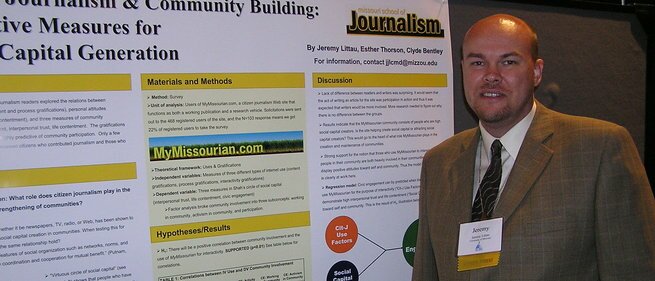
As a social scientist I deal in statistics, and when I think about the argument against eliminationist rhetoric in political discourse I fall back on the comfort of multiple regression as a framework for thinking about a complex world. In short, regression is a statistical technique that allow you to plug many different variable factors into a statistical model in order to predict a dependent variable (DV). For example, on my dissertation I looked at various types of motivation for media use, actual media use, community involvement, and others to predict activism. In those analyses alone I had anywhere from 18 to 30 independent variables predicting my various DVs.

What regression gives us for each of those predictor variables is a set of numerical values we call beta weights. Betas are often small, but when they are statistically significant predictors they tell us the relative strength to which they predict the dependent variable. In other words, it’s a way of measuring how much they comparatively influence the DV. The higher the beta, the more of a factor it is. Just because a beta is small doesn’t mean it doesn’t have influence; it’s just a way of measuring the influence of one predictor variable compared to another, and a way of noting that causality is never simple.

So, betas and rhetoric. People want a magic straight-line A-to-B predictor on the Giffords shooter. He’s crazy, therefore he shot someone and that must be why. He liked Hitler and Marx, that must be why. But life isn’t like that. Everything is a beta, everything has influence, large or small. It’s never, ever, ever any one thing in social science. Even if he is crazy (and raise your hand if you have the psychology credentials to make that assessment from your easy chair), he wasn’t always so and we don’t know when or how it happened. So what are his betas, the things influencing the development of his mind?

It’s entirely appropriate to ask about those influences because some of the influences on him are the same ones we encounter, just as he did, either directly or indirectly through our peers. In many cases, in a world where we both produce and consume media, we are helping create those influences. People heard “Palin,” but I’m also concerned with you and me.

My argument Sunday was not that this is Palin’s fault, or the right’s fault. It was that we all have our own betas, our own influences, and a lot of them come from media. An enormous amount, often in volume we are unaware of. We also know of a phenomenon called the third-person effect, where we tend to overestimate media’s influence on others and underestimate its influence on ourselves. This stuff is all known. We have research to back it up.

So what are our own betas? This is the entire thrust of my argument. It shouldn’t be controversial to argue for a more civil tone, that the more negative influences pile up in a system the more effect they have on people. It shouldn’t be controversial to point out that our leaders have outsized influence in media systems and that their words have a more widespread effect on the tone of the culture than the average citizen.

And we sure shouldn’t have to prove causality in the Giffords shooting to convince people we should be civil toward one another. This is a red-herring argument, as if the lack of direct causality absolves us of the need to treat one another like we’d want to be treated.

Put another way: Words exist in community, indeed are the very building blocks. What kind of community are we creating with our expression? Granted, there are people who want to make a causal claim here. I am not one of them. But I do think things like the Giffords shooting offer us moments to search our own souls and figure out what we can do to move forward in a positive manner. This is not and should not be a partisan idea.

Look, if you’re looking for “the” cause in the Giffords shooting, you’re not going to find it. You can convince yourself, but you won’t know. People are complicated. Media systems (and this guy consumed his share of media) are complicated, and the human brain is too wondrous and complex for us to definitively know what media did to him let alone what it’s doing to us as individuals.

And if heated rhetoric had nothing to do with these shootings, that doesn’t negate the need for civility. To argue otherwise is to imply that heated rhetoric is acceptable, Golden Rule and our own spiritual values be damned.

That’s not what our churches teach. That’s not what we teach our children. That sure isn’t what I teach my students. Words have meaning, and they have consequences, often in ways we don’t intend and cannot measure. So why are we so eager to cast disdain on an argument we be nice to each other, to accuse someone like myself of politicizing it (and I guarantee you that you don’t know my complex politics, even if you think you have a good idea)?

A speech won’t turn me violent. Nor would a web site, a video game, a song, or a TV show. But if we surround ourselves with it, immerse ourselves in a culture of violent rhetoric, particularly eliminationist rhetoric? When we think of political opposites as evil, as destroying our country? If you can’t see the potential cumulative effect there, you essentially argue that words and expression are meaningless, and I don’t accept that claim.

Finally, people have argued that this isn’t the time to talk about rhetoric, that it’s disrespectful to the victims to do it now. But if not now, when? Many, including myself, criticized Palin’s map a year ago. I talk about civility in my classes all the time. Jon Stewart held a rally for it and was pretty well mocked by some on the right (and quite a few on the left, actually). This is not a new topic for many of us, but there has been no impetus to listen. It wasn’t that pressing, didn’t seem that urgent. So when would you have listened, America? Because to this point you really haven’t.

So be strong and vigorous in your arguments, and use your full intellect. Stand for the things you believe in. But it’s not controversial to treat one another with kindness and respect. Even if we could prove beyond a shadow of a doubt that rhetoric had nothing to do with these shootings (and we can’t), how do we lose?

If you won’t listen to me, at least listen to Rep. Giffords.

Tagged , , . Bookmark the permalink.

One Response to Back with some clarity

  1. Jennifer Studwell says:

    Isn’t it our obligation to make the world a better place for our children, grandchildren and all generations to come? This article says it perfectly. I’d challenge anyone to come up with a legitimate argument. Thank you so much for this presentation.

Leave a Reply

Your email address will not be published. Required fields are marked *

You may use these HTML tags and attributes: <a href="" title=""> <abbr title=""> <acronym title=""> <b> <blockquote cite=""> <cite> <code> <del datetime=""> <em> <i> <q cite=""> <strike> <strong>