AP’s new math

A couple months after Dean Singleton’s comments raised a fury about the Associated Press going after link aggregators, the policy is taking shape. AP apparently is going to use software to charge something akin to a toll for people who link to stories on AP member sites.

Columbia Journalism Review has a different take on this one, quoting a higher-up at AP who says the the company’s target is not bloggers but rather data scrapers who use news to make money on traffic.

My thoughts on this one are pretty well out there. The new piece of information is that apparently AP thinks they’re tapping a gold mine. An AP rep says in the CJR piece that they are going after aggregators who are making “tens if not hundreds of millions” on this stuff. (more…)

Five years at MU: Retrospection time

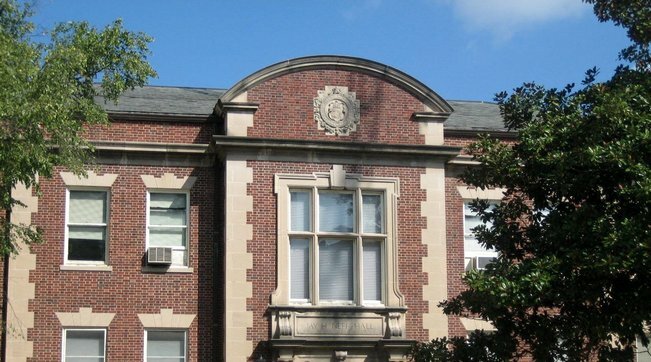
I turned in all of my paperwork and the final copy of my dissertation to the Graduate School here at Missouri, so I am finished. It’s a rainy and uncharacteristically cooler day here in Columbia, so I didn’t get feel the warm sunbeams of approval washing over me as this newly minted Ph.D. exited Jesse Hall. But that’s OK; I was never in this for the title or adulation.

I’ll blog about the dissertation some other time, but not today. This post is more retrospective of the journey I’ve just completed and full of gratitude for how I got here. Indulge me or skip it, it’s up to you.

I.

I left Los Angeles to come to Missouri back in the summer of 2004. It was not a well-received decision among some of my newspaper colleagues. I left behind a pretty good paying job at the Daily News that, for all its headaches, I enjoyed doing. I also left behind some outstanding colleagues for a five-year commitment of no pay and student living. My new life in Missouri was not the high life compared to my previous life in Los Angeles, that’s for sure. (more…)

The finish line, nearly!

In 48 hours, my dissertation final draft will be done and I’ll ship this thing out to my committee before my July 16 defense date. I’m exhausted from too many 15-hour days, but I sometimes marvel at the stamina I’ve acquired for research in graduate school.

I’ll wait to post a full abstract until this thing is fully defended, because I’m always a little nervous about putting the cart before the horse. But real briefly, I’ll say what it’s about. I surveyed a bunch of online community users of various types and over various sites to get a sense of their social ties. I tapped into ideas of social capital first theorized by Pierre Bourdieu and made famous by Robert Putnam in Bowling Alone.

The basic idea is that the thickness and the extension of peoples’ social networks is a powerful predictor of how we help one another and get involved in everyday civic life, types of engagment that span from voting to the reciprocity that comes with giving money to a friend in need.

Typically researchers measure offline social capital (offline ties for real-world local benefit) and online social capital (ties formed online for real-world local benefit). I measured those two as well as a third new variable I’ve created called virtual social capital, which measures online ties created for non-local beneft (I’m calling it Distance Engagement).

The one thing I can say so far is my created variable works big time as a distinct way of measuring online ties. So I’m thrilled about that.

But I’ve found some other stuff related to motivations for using online communities, social bonds, and the forms of engagement. I’ll save those results for later, save this teaser: social media doesn’t do squat for local engagement as a general predictor across all different types of sites, but it does surprising things for online forms of activism and helping. And the motivations/needs people bring to their media use is very important in determining how this all works. Viva la Media Choice Model!

Anyhow, 48 hours and I’ll send this thing out. Defense in 11 days, yikes!